
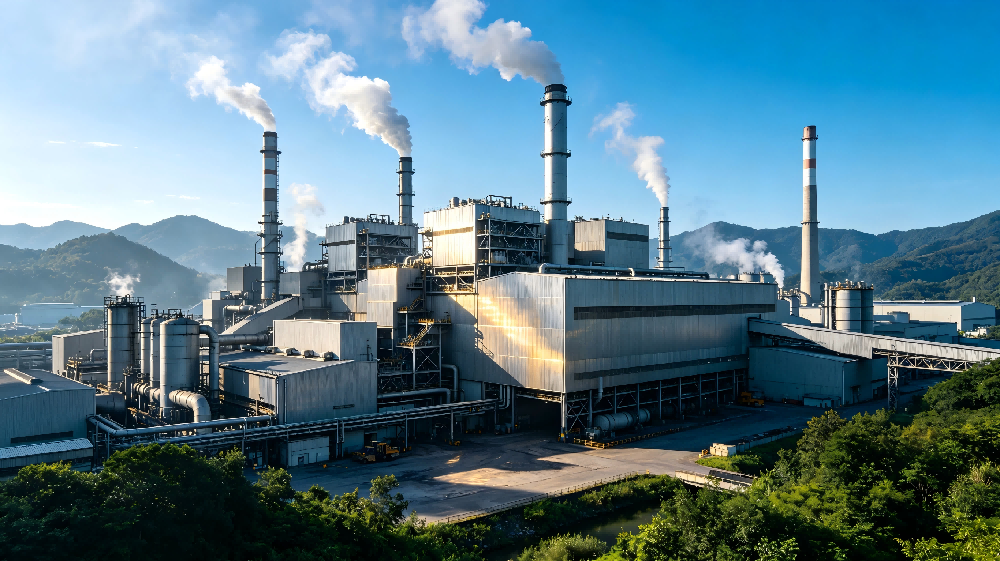
China’s Steel Industry Responds to Global Market Shifts Through Steadfast Green and Low-Carbon Transition
The 2026 European Steel Market Conference, co-hosted by the Metallurgical Industry Branch of the China Council for the Promotion of International Trade (hereinafter referred to as the Metallurgical CCPIT) and Kallanish, was held in Vienna, Austria, on June 9–10, 2026. Centered on the transformative shifts unfolding in Europe’s steel sector amid tightening environmental regulations, soaring energy costs and reshaped trade rules, the conference conducted in-depth discussions on core topics including European steel production and operation, downstream demand recovery, the implementation progress of the EU Carbon Border Adjustment Mechanism (CBAM), low-carbon steelmaking technologies, scrap steel supply and demand, as well as green and digital intelligent transformation. It drew over 200 delegates from government authorities, industry associations, steel manufacturers, trading firms, research institutes and investment institutions. Li Yiren, Vice Chairman of the China Iron and Steel Association and Chairman of the Metallurgical CCPIT, together with representatives from domestic steel enterprises including Taiyuan Iron & Steel Group, Jingye Iron and Steel, Zhongtian Iron and Steel and Xinhui Metallurgy, attended the conference as invited guests.
In his keynote speech titled Updates and Outlook of China’s Iron and Steel Industry, Li Yiren pointed out that China’s iron and steel industry has fully entered a development phase featuring output reduction, quality improvement and structural upgrading. Against the new landscape where tariff and non-tariff trade barriers disrupt the global marketplace, China’s steel sector is leveraging the certainty of steadfast green and low-carbon transformation to proactively and effectively navigate the complex shifts sweeping the global steel market.
Supported by solid statistical data and clear development roadmaps, Li illustrated the real-world progress and long-term blueprint of China’s steel industry in advancing green transition, sending a clear message of unwavering transformation and proactive action amid global uncertainties. He noted that China’s steel sector is advancing green and low-carbon development with unprecedented momentum. The industry enforces the world’s strictest pollutant emission standards and energy efficiency indicator systems, rolling out ultra-low emission retrofits and maximum energy efficiency projects. To date, full-process ultra-low emission upgrades have been completed for crude steel capacity exceeding 900 million tonnes. China’s steel sector has reached an unparalleled standard of environmental protection, building the world’s cleanest and most eco-friendly steel production system.
Li elaborated that aligned with the goals of peaking carbon emissions before 2030 and achieving carbon neutrality before 2060, China’s steel industry is steadily pushing forward low-carbon development across six key dimensions: systematic energy efficiency enhancement, resource recycling, process optimization and innovation, breakthroughs in smelting technologies, product iteration and upgrading, as well as carbon capture, utilization and storage (CCUS). Major breakthroughs have been achieved in core low-carbon technologies, including hydrogen-rich / all-hydrogen-based direct reduction, hydrogen-rich carbon cycle blast furnaces, hydrogen-based smelting reduction, near-zero carbon emission electric furnace processes, near-net-shape manufacturing, waste heat recovery from metallurgical slags, and carbon dioxide capture and utilization. These technologies have moved beyond laboratory trials to large-scale industrial application, delivering a practical “Chinese solution” for green and low-carbon transformation of the global steel industry.
Li emphasized that the green transition of China’s steel industry delivers benefits not only domestically but also exerts a profound influence on global industrial chains. The China Iron and Steel Association has established a mature Environmental Product Declaration (EPD) system, having issued more than 20 Product Category Rules (PCRs) serving over 9,600 registered users. It is actively pursuing mutual recognition of relevant platforms with countries and regions worldwide to better serve the global steel industry and its upstream and downstream supply chains.
During the interactive session, Li held candid exchanges with European industry representatives on hot-button issues such as production capacity regulation, export licensing and the CBAM. He explained that China’s revised capacity replacement policy raises the replacement ratio to 1.5:1, further demonstrating the steel industry’s firm resolve to proactively rein in production capacity, cut crude steel output and optimize existing capacity stock. China has imposed export licensing controls on nearly 300 HS code steel products, which will further curb exports of primary steel products such as steel billets and raise the export share of high-value-added green low-carbon steel products. China’s steel sector is voluntarily optimizing its trade mix to supply cleaner, higher-end steel products to the world.
Regarding the CBAM, Li responded that Chinese steelmakers are capable of mass-producing low-carbon steel and can fully meet the green procurement requirements of the European market. Meanwhile, China’s steel industry is accelerating integration into the national carbon emissions trading system to voluntarily align with global low-carbon trade rules. He stated that China’s steel sector stands ready to deepen cooperation with European and global partners, share low-carbon technological achievements, and jointly build a greener and fairer international steel trade environment.
At the close of his speech, Li sincerely invited all participants to visit Chinese steel enterprises for field tours to witness the progress of green and intelligent development across China’s iron and steel industry firsthand. He encouraged attendance at the 2nd China International Steel Week to be held in Shanghai from September 19 to 24 this year. Looking to steel as a bridge, he expressed hopes to boost technological exchanges, industrial complementarity and mutual trade trust between China and Europe, working hand in hand toward a low-carbon, intelligent and high-end future for the global steel industry.