
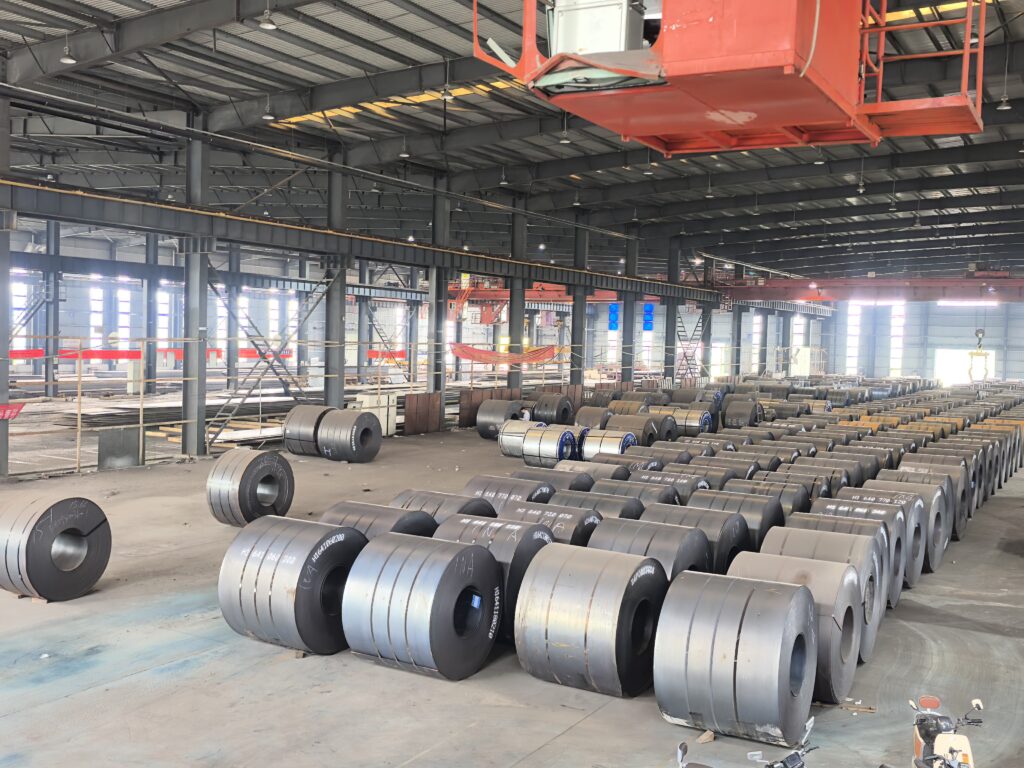
Financing Backing Urban Renewal & Renovation; Total Steel Inventory Switches from Decline to Growth, Mill Stock Rises for Two Consecutive Weeks
2026 marks the first year for the implementation of the urban renewal plan under the 15th Five-Year Plan, and the renovation of underground pipeline networks has entered a large-scale advancement phase.
Funding Arrangements
Central finance will provide direct support of RMB 257 billion for urban renewal and pipeline network construction in 2026.
Total inventories of the five major steel product categories reversed their downward trend and posted a rise this period. Social inventories kept declining, while mill inventories climbed for two consecutive weeks.
Breakdown by product category: inventories of reinforcing steel bars and wire rods continued to drop; medium and heavy plate inventories rose for two straight weeks; hot rolled coil and cold rolled coil inventories both shifted from decline to growth. Total domestic steel inventories are projected to edge up further next week.
Social Steel Inventories
For the week ending June 17, 2026, data tracked by SteelHome showed social inventories of reinforcing steel bars stood at 4.6722 million tonnes, down 49,900 tonnes week-on-week, compared with a week-on-week drop of 44,300 tonnes in the prior week. The figure has fallen for 13 consecutive reporting periods, yet the decline has slowed markedly recently.
From an industrial perspective on the supply side: average daily crude steel output at key domestic steel enterprises in early June rebounded after falling for two successive ten-day periods. Although output remained lower than the same period last year, supply-side pressure is building up as the trend turns upward.
In terms of seasonal solar terms, the Grain in Ear solar term is underway, and the Summer Solstice—the 10th solar term and the fourth solar term of summer—will arrive in two days. After the Summer Solstice, daylight hours in the Northern Hemisphere gradually shorten. This period features high temperatures, high humidity and frequent thunder showers, with heatwaves becoming more prevalent across both northern and southern China.
The steel industry is currently transitioning from the seasonal peak demand season to the off-season, yet blast furnace operating rates at steel mills have risen for four consecutive weeks recently. Judging from current inventory movements, the national steel inventory destocking cycle monitored by SteelHome may come to an end, as total inventories turned to growth this period after previous declines.
For construction steel products: measured by the Gregorian calendar, current social inventories of reinforcing steel bars are 885,100 tonnes higher than the same period last year, versus a gap of 839,900 tonnes recorded in the prior period, reflecting sustained weakening marginal improvement. In the equivalent period last year, social rebar inventories fell 95,100 tonnes week-on-week, compared with a drop of only 49,900 tonnes this year, pointing to feeble marginal destocking momentum.
To sum up, not only are current market inventories of reinforcing steel bars higher than last year’s level, but the pace of inventory drawdown is also noticeably slower, signaling unbalanced coordination between production and demand for rebar.
Steel Mill Inventories
Mill inventories of reinforcing steel bars reversed declines in late May, built up stock for four straight weeks, then edged down again. As of the week ending June 17, mill rebar inventories sampled and tracked by SteelHome reached 3.423 million tonnes, a week-on-week decrease of 19,600 tonnes, in contrast to a week-on-week gain of 31,800 tonnes in the prior period, marking a shift from accumulation to destocking.
By the Gregorian calendar, current mill rebar inventories are 214,100 tonnes above the same period last year, compared with a surplus of 256,300 tonnes in the prior reading. During the matching period last year, mill rebar inventories rose 22,600 tonnes week-on-week, while this year they fell 19,600 tonnes, delivering positive marginal changes.
In short, though mill rebar inventories remain higher year-on-year, they have declined week-on-week versus a rise seen last year, indicating steel mills are ramping up production control efforts.
Financial Support for Urban Renewal and Renovation
2026 is the launch year for the 15th Five-Year Plan urban renewal plan, and underground pipeline upgrading has entered large-scale construction.
Funding Allocation
Central finance will allocate RMB 257 billion in direct support for urban renewal and pipeline network works in 2026, including RMB 97 billion of central budgetary investment plus RMB 160 billion of ultra-long-term special treasury bonds.
Advance Fund Allocation
Under the 2026 advance funding batch, RMB 220 billion of special treasury bond funds for pipeline networks and 281 projects have been fully issued, covering all 31 provincial-level regions nationwide, with priority given to urban drainage and flood control, gas safety renovation and other key sectors.
Regional Market
Tracking data from SteelHome revealed that construction steel inventories in East China maintained a destocking trend in May 2026 with mild short-term fluctuations and continued to fall this period. As of June 17, East China’s construction steel inventories slipped from 821,700 tonnes in the prior period to 745,900 tonnes, a reduction of 75,800 tonnes and marking two consecutive weeks of declines. Monitoring data also showed minimal shifts in operating rates of construction steel production lines at East China steel mills amid volatile seasonal downstream demand.
Domestic steel prices extended their downtrend this week. For the week ending June 18, SteelHome’s long product price index lost 0.2% week-on-week, while the flat product price index fell 0.11% week-on-week, with both declines narrowing further.
Inventories of Five Major Steel Grades
In the week ending June 18, social inventories of the five core steel varieties nationwide tracked by SteelHome totaled 12.6616 million tonnes, down 17,200 tonnes week-on-week, versus a week-on-week drop of 98,100 tonnes (0.36%) in the prior period, representing a sharp slowdown in destocking speed.
Combined national inventories (social inventories plus mill inventories) of the five steel categories hit 20.5157 million tonnes this period, a net increase of 45,700 tonnes week-on-week, reversing the prior net decline of 32,500 tonnes. By comparison, total inventories fell 52,900 tonnes in the same period last year.
Supply Side
Statistics from the China Iron and Steel Association (CISA) showed average daily crude steel and pig iron output at key monitored steel enterprises in early June 2026 stood at 2.0803 million tonnes and 1.888 million tonnes respectively, rising 3.8% week-on-week for both indicators. Based on this calculation, national average daily crude steel output for the ten-day period is estimated at 2.79 million tonnes, with daily pig iron output at 2.38 million tonnes.
As of June 17, the national blast furnace operating rate tracked by SteelHome reached 90.07%, up 0.43 percentage points week-on-week, following a minor uptick of 0.02 percentage points in the prior period. The operating rate has risen for four consecutive weeks after four straight periods of declines.
Current inventory movements signal the likely end of the nationwide steel inventory destocking cycle. Year-on-year comparisons highlight weak marginal momentum: total steel inventories fell 52,900 tonnes week-on-week last year but rose 45,700 tonnes this year, with overall inventory volumes still markedly higher than the prior-year level.
The Chinese economy in May 2026 displayed a clear divergent pattern: robust external demand paired with sluggish domestic demand, rising prices alongside weak real economic activity. The Producer Price Index (PPI) rose more than expected; high-end manufacturing, digital industries and exports became core growth drivers, while real estate, traditional consumption and private investment remained depressed, with domestic demand recovery falling short of expectations.
Cumulative fixed-asset investment from January to May dropped 4.1% year-on-year, widening the decline recorded in the January–April period.
Social inventories of the five major steel grades edged down only 17,200 tonnes this period, compared with a 131,200-tonne drop in the matching period last year, pointing to persistent weakening destocking momentum, while social inventory volumes remain far above last year’s readings.
Growth in fixed-asset investment has slowed and the driving force of traditional infrastructure has faded, creating an urgent need to foster new investment growth engines.
The “Six Network Infrastructure” initiative outlined in the 15th Five-Year Plan delivers dual benefits: shoring up weak links in traditional infrastructure and expanding new-type infrastructure. Investment in this initiative is projected to exceed RMB 7 trillion in 2026, with total estimated investment ranging from RMB 20 trillion to RMB 27.5 trillion over the full 15th Five-Year Plan period. Independent third-party market analyses put the full-caliber total investment above RMB 35 trillion when including comprehensive multi-modal transport, education, healthcare and other major infrastructure projects. This initiative can directly expand investment, stabilize economic growth and fully unlock domestic consumption potential.
Total steel inventories are expected to keep rising next week. Market participants should closely monitor shifts in blast furnace and electric arc furnace operating rates at steel mills as well as the release of end-user demand.